
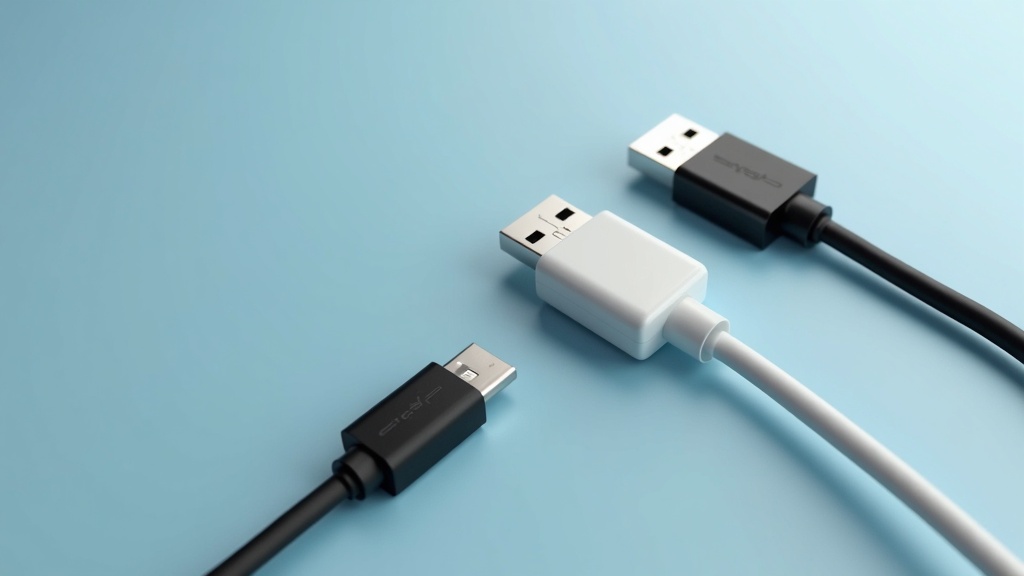
USB Cables and Adapters Tips: 2026 Buying Guide
USB cables and adapters tips can save you from slow charging, data loss, and even device damage. This guide explains how to choose the right cables based on power, speed, and certification standards for 2026.
Table of Contents
- 1. Understand Power Delivery and Wattage Ratings
- 2. Check Data Transfer Speeds
- 3. Look for USB-IF Certification
- 4. Inspect Build Quality and Cable Thickness
- Frequently Asked Questions
- Comparison: USB-C Cable Types
- Practical Tips for 2026
- Final Thoughts on USB Cables and Adapters Tips
USB cables and adapters tips are essential guidelines for selecting cables that match your device’s power needs, data speed requirements, and safety standards. This guide covers wattage, certification, build quality, and practical buying advice for 2026.
Quick Stats: USB Cables and Adapters Tips
- USB-C Extended Power Range (EPR) cables support up to 240 watts for universal laptop and monitor charging (FindArticles, 2026)[1].
- 90% of market-tested 2026 USB4 cables with printed, non-etched logos fail official USB-IF speed and safety tests (F.Y. Cables Lab, 2026)[2].
- USB4 or Thunderbolt 4-certified cables support data transfer speeds up to 40 Gbps (FindArticles, 2026)[1].
Understand Power Delivery and Wattage Ratings
Choosing the correct power rating is the first step in applying USB cables and adapters tips effectively. USB-C Power Delivery (PD) cables come in two main categories: standard 60W–100W cables and Extended Power Range (EPR) cables that handle up to 240 watts (FindArticles, 2026)[1]. For charging phones and earbuds, a minimum of 60W is recommended for safe operation (PrimeCables, 2026)[3]. Laptops and docking stations typically require 60–100W, while a high-end 16-inch MacBook Pro demands up to 140W (Gentle Mole, 2026)[4].
Most everyday USB-C cables are rated for 100W, which covers the majority of laptops and tablets (Smartish, 2026)[5]. If you own a powerful workstation or plan to future-proof your setup, an EPR cable is the better choice. The PrimeCables Technical Team warns: “Not all USB-C cables are equal, even if the connectors look identical. High-power charging requires E-marked cables that correctly report their limits” (PrimeCables, 2026)[3].
When shopping, look for the wattage rating printed on the cable or its packaging. A cable that cannot handle your device’s maximum draw will either charge slowly or overheat. For a reliable selection of high-power cables, explore options like those found at connectivityproducts.com for laptop-compatible accessories.
Check Data Transfer Speeds
Data speed is another critical factor in USB cables and adapters tips. USB-C cables support a range of speeds, from USB 2.0 (480 Mbps) to USB4 (40 Gbps). For most users, USB 3.2 Gen 2 at 10 Gbps strikes the best balance between cost and performance (Smartish, 2026)[5]. If you work with large files, video editing, or external SSDs, a USB4 or Thunderbolt 4 cable is worth the investment, offering up to 40 Gbps (FindArticles, 2026)[1].
The Anker Cables Team advises: “Before buying a cable, decide what type and version of USB you want. Different connectors and versions – from USB-A and Micro-USB to USB-C and USB4 – offer varying data transfer speeds, power delivery, and device compatibility” (Anker, 2025)[6]. This means you should match the cable version to your device’s capabilities. A USB 3.2 Gen 2 cable will work with a USB4 port, but it will cap at 10 Gbps. Conversely, a USB4 cable in a USB 3.2 port will only run at the port’s maximum speed.
For those upgrading their home office or creative workspace, selecting a cable with the right speed rating ensures your workflow remains uninterrupted. Always check the cable’s specifications before purchasing – speed ratings are usually printed on the connector or packaging.
Look for USB-IF Certification
Certification is a cornerstone of reliable USB cables and adapters tips. The USB Implementers Forum (USB-IF) provides a certification program that tests cables for power handling, data speed, and safety. As the USB-IF states, “The USB-IF standardized logos for speed and power to cut through confusion – use them” (USB-IF, 2026)[7]. A certified cable will display the official USB-IF logo, often etched into the connector rather than printed.
The importance of certification is underscored by testing data: 90% of market-tested 2026 USB4 cables with printed, non-etched logos fail official USB-IF speed and safety tests (F.Y. Cables Lab, 2026)[2]. The F.Y. Cables Lab Editorial Team adds: “USB-IF certification is your only protection against underperforming lines that risk damaging devices” (F.Y. Cables Lab, 2026)[2]. This statistic alone should motivate you to avoid bargain-bin cables.
When browsing, look for the etched USB-IF logo on the cable’s connector. If the logo is printed or missing entirely, consider it a red flag. For a curated selection of certified cables, you can check resources like fycables.com for detailed testing results. Certification ensures your cable will perform as advertised and protects your devices from electrical damage.
Inspect Build Quality and Cable Thickness
Physical construction matters more than most shoppers realize. A key USB cables and adapters tips is to examine the cable’s thickness and strain relief. The Smartish Product Engineering Team recommends: “Match your cord to your device’s maximum wattage and inspect the strain relief where the cable meets the connector; thick, flexible boots prevent the wire breaks that kill 80% of charging cables” (Smartish, 2026)[5]. For cables handling 100W or more, a diameter of at least 5 millimeters is recommended to prevent overheating (Smartish, 2026)[5].
Thicker cables often use heavier-gauge wires, which reduce resistance and heat buildup. The strain relief – the rubber or plastic boot where the cable meets the connector – should be thick and flexible. A rigid or thin boot is a sign of poor construction that will likely fail after repeated bending. Braided nylon exteriors also add durability and resist tangling.
For those who appreciate quality craftsmanship in their accessories, consider how attention to detail in handmade items reflects the same principle applied to cables. A well-built cable lasts years, while a cheap one may fail in months. Always feel the cable before buying if possible, or read reviews that mention build quality. A 5mm-thick, braided, USB-IF certified cable is the gold standard for 2026.
Important Questions About USB Cables and Adapters Tips
What is the difference between USB-C and USB4 cables?
USB-C refers to the connector shape, while USB4 is a specification that defines data transfer speeds and capabilities. A USB-C cable can support USB 2.0, 3.2, or USB4 standards. USB4 cables offer speeds up to 40 Gbps and are backward compatible with older USB-C devices. When following USB cables and adapters tips, always check the cable’s specification, not just the connector type.
How can I tell if a USB-C cable supports fast charging?
Look for the wattage rating printed on the cable or its packaging. A cable that supports USB Power Delivery (PD) will often list its maximum wattage, such as 60W, 100W, or 240W. Additionally, EPR (Extended Power Range) cables are designed for high-power devices. Certification logos from USB-IF also indicate fast-charging capability. As a general rule, any cable thicker than 5mm is likely built for higher power delivery.
Are expensive USB cables worth the money?
Not always, but price often correlates with certification and build quality. A moderately priced, USB-IF certified cable is usually a better investment than a cheap uncertified one. The data shows that 90% of non-certified cables fail safety tests. However, extremely expensive cables with gold-plated connectors or exotic materials offer no practical benefit for most users. Focus on certification and wattage ratings rather than brand prestige.
Can I use a phone charger cable for my laptop?
Only if the cable supports the laptop’s power requirements. Most phone cables are rated for 60W or less, while laptops typically need 60–100W. Using an underpowered cable will result in very slow charging or no charging at all. In some cases, it can cause the cable to overheat. Always match the cable’s wattage rating to your device’s maximum power draw. An EPR cable rated for 240W is safe for any device.
Comparison: USB-C Cable Types
Choosing the right cable depends on your specific needs. The table below compares common USB-C cable types based on power, speed, and use cases, helping you apply USB cables and adapters tips effectively.
| Cable Type | Max Power | Max Speed | Best For |
|---|---|---|---|
| Standard USB-C (60W) | 60W | 480 Mbps–10 Gbps | Phones, earbuds, tablets |
| USB-C PD (100W) | 100W | 10–20 Gbps | Laptops, docking stations |
| USB4 / Thunderbolt 4 | 100–240W | 40 Gbps | High-end laptops, SSDs, monitors |
Practical Tips for 2026
Applying these USB cables and adapters tips will extend the life of your cables and protect your devices. First, always buy USB-IF certified cables – look for the etched logo. Second, match the cable’s wattage to your device’s maximum power draw. For laptops, aim for 100W or higher. Third, choose cables with a diameter of at least 5mm for high-power applications to prevent overheating. Fourth, inspect the strain relief; thick, flexible boots last longer. Fifth, consider braided nylon cables for added durability. Finally, avoid using phone cables for laptops unless they are rated for the required wattage. For a growing trend in 2026, USB4 cables are becoming standard for new laptops, so investing in one now future-proofs your setup.
Final Thoughts on USB Cables and Adapters Tips
Mastering USB cables and adapters tips ensures you get the right cable for every device, saving money and preventing damage. Focus on power ratings, data speeds, USB-IF certification, and build quality. For a reliable selection of certified cables suitable for laptops and high-power devices, check out the options available at cats under the stars lyrics for more detailed guides and product recommendations.
Useful Resources
- Report Identifies 10 Must-Have Cables for 2026. FindArticles.
https://www.findarticles.com/report-identifies-10-must-have-cables-for-2026/ - 2026 USB4.0 Cable Guide: Certification, Power & Length. F.Y. Cables Lab.
https://fycables.com/2026-usb4-0-cable-guide-certification-power-length/ - How to Choose the Right USB Type-C Cable (2026). PrimeCables.
https://blog.primecables.ca/2017/08/how-to-choose-the-right-usb-type-c-cable-to-prevent-device-homicide/ - USB-C Standards Guide. Gentle Mole.
https://note.com/gentle_mole5600/n/nccc7b5eaca61?hl=en - Best USB-C Cords That Actually Work in 2026. Smartish.
https://smartish.com/blogs/news/best-usb-c-cords - How to Identify Different Types of USB Cables: A Brief Guide. Anker.
https://www.anker.com/blogs/cables/how-to-identify-different-types-of-usb-cables-a-brief-guide