
Excavation and Backfill in Mining Operations
Discover how excavation and backfill processes ensure ground stability in mining. Learn about safety protocols, equipment trends, and geotechnical methods.
Table of Contents
- The Mechanics of Soil Extraction and Compaction
- Safety Protocols and Trench Collapse Prevention
- Advanced Excavation and Backfill Techniques in Mining
- Equipment Trends and Market Growth
- Your Most Common Questions
- Comparing Earthworks Methods
- Practical Tips for Site Preparation
- Key Takeaways
Key Takeaway
Excavation and backfill is the industrial process of removing earth to access minerals and subsequently replacing the void with compacted soil or grout. This dual-phase operation ensures structural integrity, prevents subsidence, and maintains slope stability in large-scale mining environments.
Earthmoving in Context
- Estimated U.S. excavation contractors industry revenue in 2026: 142.5 billion dollars (IBISWorld, 2026)[1].
- Projected U.S. excavation equipment market size in 2035: 37.46 billion dollars (Fact.MR, 2025)[2].
- Estimated number of U.S. excavation contractor businesses in 2026: 236 thousand businesses (IBISWorld, 2026)[1].
Introduction
The glittering silver and gold found in fine jewelry begin their journey deep underground, requiring massive earthmoving efforts to reach the surface. At the core of these mineral extraction operations is excavation and backfill, a critical cycle that shapes the modern mining landscape. Earthworks contractors are in the business of preparing land for construction and resource recovery, moving millions of tons of overburden to access valuable ore bodies (Nationwide, 2021)[3]. However, removing this material creates significant geotechnical challenges. Without proper soil replacement and compaction, the resulting subterranean voids can lead to catastrophic ground failures. This article explores the mechanics of cut and fill operations, essential safety protocols, and the advanced grouting techniques used to maintain foundation support in demanding industrial environments.
The Mechanics of Soil Extraction and Compaction
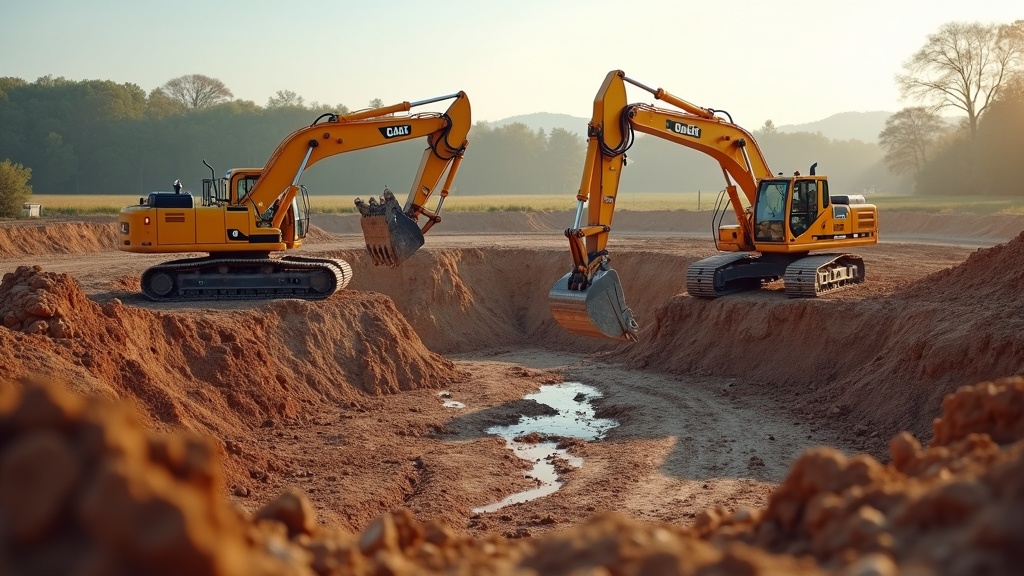
Soil extraction and compaction form the physical foundation of any large-scale mining operation. The process begins with site preparation and geological surveys to map the subsurface topology. Heavy machinery, including hydraulic excavators and articulated dump trucks, removes the overburden to expose the target mineral seams. This initial digging and refilling phase requires precise coordination to ensure that the extracted material is either stockpiled for later use or immediately transported to processing facilities.
Once the ore is removed, the focus shifts to earthmoving and soil replacement. Geotechnical engineers monitor subtle ground shifts during these earthworks; observing these micro-movements requires acute attention to detail to gauge the earth’s shifting stability. By continuously measuring load-bearing capacity and slope stability, engineers can predict potential failures before they occur. Implementing rigorous subsidence prevention strategies during this phase protects surface infrastructure from the devastating effects of uneven settling. The replaced soil must be compacted in controlled layers to restore the natural density of the earth, ensuring long-term ground stability.
Safety Protocols and Trench Collapse Prevention
Trench collapse remains one of the most severe hazards in the earthmoving industry, necessitating rigorous safety protocols. When workers descend into deep cuts to install retaining walls or inspect foundation support, the surrounding soil exerts immense lateral pressure. The lateral pressure exerted by saturated soil can exceed thousands of pounds per square foot, making mechanical bracing an absolute necessity. A sudden shift in soil moisture or an unexpected vibration from nearby heavy machinery can trigger a catastrophic failure. As Doug Parker, Assistant Secretary of Labor for OSHA, noted, “Trench collapse is a leading cause of death in the construction industry” (U.S. Department of Labor, 2023)[4].
To mitigate these risks, contractors employ a variety of protective systems. Shielding involves placing trench boxes inside the excavation to protect workers from falling debris, while shoring uses hydraulic or mechanical supports to brace the trench walls. Furthermore, benching cuts the sides of the trench into stepped levels to reduce the risk of avalanches. Jim Frederick, Deputy Assistant Secretary of Labor, emphasized the stakes involved: “If we don’t have safe trenches and excavations, workers will continue to die doing this work” (U.S. Department of Labor, 2023)[4]. Compliance with U.S. Department of Labor trenching fatality prevention efforts is therefore not just a regulatory requirement, but a fundamental moral obligation for all site managers.
Advanced Excavation and Backfill Techniques in Mining
Advanced techniques in subterranean stabilization have revolutionized how mining companies manage the voids left behind after mineral extraction. Traditional mechanical compaction is often insufficient for deep underground cavities where human access is limited or dangerous. In these scenarios, trenching and backfilling evolves into a highly specialized fluid dynamics operation. Cementitious grout – a mixture of cement, water, and specialized aggregates – is pumped under high pressure into the subterranean voids to create a solid, rock-like mass.
This method provides immediate structural integrity and effectively eliminates the risk of future sinkholes. For specialized applications, professionals rely on mining backfill grouting service locations to identify regional capabilities for deep mine stabilization. The grout not only supports the surrounding rock strata but also encapsulates any residual hazardous materials, preventing groundwater contamination. Furthermore, encapsulating residual tailings within the grout matrix significantly reduces the environmental footprint of the mining operation by preventing heavy metal leaching. By integrating these advanced fluid-based methods into their standard operating procedures, mining operators can safely maximize ore recovery while ensuring the long-term environmental and structural stability of the site.
Equipment Trends and Market Growth
The market for earthmoving equipment is experiencing robust growth, driven by increasing global demand for raw materials and infrastructure development. Industry revenue has been increasing at a CAGR of 2.8% over the past five years to total an estimated $142.5 billion through the end of 2026 (IBISWorld, 2026)[1]. This financial expansion is mirrored by a rise in the number of active businesses, with an estimated 236 thousand businesses operating in the U.S. excavation sector by 2026 (IBISWorld, 2026)[1].
Technological advancements in heavy machinery are also reshaping the landscape. Modern excavators are now equipped with GPS-guided grading systems and automated compaction sensors. Modern excavation sensors react instantly to ground vibrations to prevent machinery accidents and ensure precise depth control. Furthermore, the demand for excavation equipment in the USA is projected to grow from USD 24.92 billion in 2025 to approximately USD 37.46 billion by 2035 (Fact.MR, 2025)[2]. The transition toward battery-electric haul trucks also reduces underground ventilation requirements, lowering overall operational costs in deep shaft environments. This surge reflects a broader industry shift toward fuel-efficient and autonomous earthmoving fleets.
Your Most Common Questions
What is the primary purpose of backfilling in mining?
The primary purpose is to restore ground stability and provide foundation support after ore removal. By filling subterranean voids with compacted soil or cementitious grout, operators prevent surface subsidence, manage groundwater flow, and maintain the structural integrity of the surrounding rock strata. This process is essential for safe, long-term site management and environmental protection.
How do contractors prevent trench collapse during digging?
Contractors use three main protective systems: sloping, shoring, and shielding. Sloping cuts the trench walls at an angle away from the excavation. Shoring involves installing hydraulic or mechanical supports to brace the soil. Shielding uses heavy steel trench boxes to protect workers inside the cut from falling debris in the event of a sudden wall failure.
What types of heavy machinery are used for earthmoving?
Standard fleets include hydraulic excavators, bulldozers, motor graders, and articulated dump trucks. For specialized soil compaction, operators use vibratory rollers and plate compactors. Modern fleets increasingly feature GPS-guided automation and telemetry sensors to optimize fuel efficiency, track maintenance schedules, and ensure precise grading according to strict geotechnical engineering specifications.
Why is soil compaction critical after refilling a void?
Proper soil compaction increases the load-bearing capacity of the refilled earth and reduces water infiltration. If the soil is left loose, it will naturally settle over time, leading to uneven surface subsidence and potential structural damage to any infrastructure built above. Controlled, layered compaction ensures the restored ground matches the density of the surrounding undisturbed earth.
Comparing Earthworks Methods
Selecting the right approach for digging and refilling depends on the depth of the void, the surrounding geology, and the required load-bearing capacity. While mechanical methods are standard for surface-level site preparation, deeper subterranean cavities require fluid-based stabilization techniques to ensure long-term slope stability.
| Method | Best Application | Key Advantage |
|---|---|---|
| Mechanical Compaction | Surface-level excavation and backfill | Cost-effective for shallow, wide areas |
| Cementitious Grouting | Deep subterranean mine voids | Provides immediate, rock-like structural integrity |
| Hydraulic Sand Filling | Underground stopes and tunnels | Utilizes local tailings, reducing waste material |
Practical Tips for Site Preparation
Successful earthworks require meticulous planning and continuous monitoring. Before breaking ground, always conduct comprehensive geological surveys to identify hidden water tables, fault lines, or unstable soil pockets. Understanding the subsurface topology prevents unexpected delays and equipment damage during the overburden removal phase.
Moisture control is another critical factor. Soil that is too dry will not compact properly, while overly saturated soil can turn into a slurry, losing all load-bearing capacity. Conduct regular Proctor tests to determine the optimal moisture content for your specific soil type before running vibratory rollers over the fill material. Monitor local weather forecasts closely, as sudden heavy rainfall can rapidly alter soil moisture content and compromise the stability of freshly graded slopes.
Finally, implement a strict maintenance schedule for all heavy machinery. Hydraulic hoses, track tension, and bucket teeth endure immense stress during cut and fill operations. Routine inspections prevent catastrophic equipment failures that could halt production or cause severe safety incidents on the job site.
Key Takeaways
Mastering excavation and backfill processes is essential for maintaining ground stability and ensuring worker safety in the mining sector. From implementing rigorous trench collapse prevention protocols to utilizing advanced cementitious grout for deep void stabilization, modern geotechnical engineering offers robust solutions for complex earthmoving challenges. As equipment technology continues to advance, contractors can expect even greater precision and efficiency in their site preparation efforts, paving the way for safer and more sustainable mining operations.
Useful Resources
- Excavation Contractors in the US – Industry Analysis 2026. IBISWorld.
https://www.ibisworld.com/united-states/industry/excavation-contractors/206/ - Demand for Excavation Equipment in USA (2025 – 2035). Fact.MR.
https://factmr.com/report/united-states-excavation-equipment-market - Excavating contractors: industry overview and trends to watch. Nationwide Agent Blog.
https://agentblog.nationwide.com/commercial-lines/commercial-industry-trends/construction/excavating-contractor-industry-trends/ - U.S. Department of Labor, state agencies, industry leaders launch effort to prevent trenching and excavation fatalities. U.S. Department of Labor.
https://www.dol.gov/newsroom/releases/OSHA/OSHA20230410