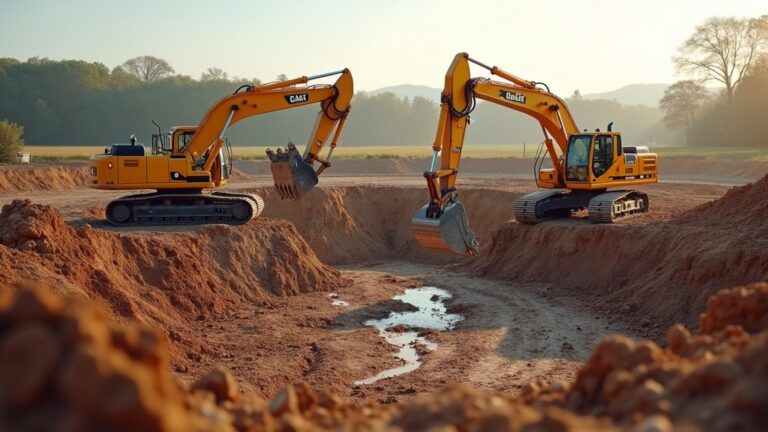

Flowable Backfill: A Practical Guide to Mining Backfill Grouting
Learn how flowable backfill is transforming mining backfill grouting with self-leveling, low-strength cementitious slurry that eliminates compaction and improves underground stability.
Table of Contents
- Quick Summary
- Flowable Backfill in Context
- Introduction
- What Is Flowable Backfill and How Does It Work?
- Key Properties and Performance Specifications
- Applications of Flowable Backfill in Mining
- Mix Design and Quality Control Best Practices
- Frequently Asked Questions
- Flowable Backfill vs. Traditional Compacted Fill
- Practical Tips for Successful Flowable Backfill Operations
- Final Thoughts on Flowable Backfill
- Useful Resources
Quick Summary: Flowable backfill is a self-compacting, low-strength cementitious slurry used as a replacement for compacted granular fill in mining, excavation, and infrastructure projects. It flows easily into tight spaces, requires no compaction, and sets with a compressive strength under 1,200 psi to allow future excavation.
Flowable Backfill in Context
- Industry standard defines flowable backfill as having an unconfined compressive strength of 1,200 psi or less at 28 days (American Concrete Institute via FHWA, 1997)[1].
- Most flowable backfill applications are designed with strengths of 300 psi or less at 28 days to facilitate future excavation (Federal Highway Administration, 1997)[2].
- Normal slump range for flowable fill mixtures used as backfill is between 6 and 10 inches to ensure adequate flowability (Federal Highway Administration, 1997)[2].
- Flowable fill can incorporate high volumes of industrial by-products such as fly ash, slag, and recycled aggregates while meeting strength requirements (ScienceDirect, 2023)[3].
Introduction
Flowable backfill has become a cornerstone of modern mining backfill grouting operations. Unlike traditional compacted earth fill, this self-leveling cementitious slurry flows effortlessly into underground voids, around pipes, and behind retaining walls without any mechanical compaction. For mining and geotechnical engineers, the material offers a unique combination of speed, safety, and reliability. The National Ready Mixed Concrete Association (NRMCA) describes flowable fill as “a self-consolidating and self-leveling low strength cementitious material with a flowable consistency that is used as an economical fill as an alternative to compacted granular fill” (NRMCA, 2021)[4]. This article explores the properties, applications, and best practices for using flowable backfill effectively in mining environments.
What Is Flowable Backfill and How Does It Work?
Flowable backfill, also known as controlled low strength material (CLSM), is a cementitious slurry that combines fine aggregate or filler, water, and cementitious materials. The Federal Highway Administration (FHWA) defines it as “a cementitious slurry consisting of a mixture of fine aggregate or filler, water, and cementitious material(s), which is used primarily as a backfill in lieu of compacted earth” (FHWA, 1997)[1]. The defining characteristic of flowable backfill is its ability to self-level and self-compact, meaning it requires zero manual or mechanical compaction after placement.
The Science Behind Self-Leveling
The flowable consistency is achieved by controlling the water-to-cementitious materials ratio. Typical water contents for flowable backfill mixtures range from 50 to 80 gallons per cubic yard (FHWA, 1997)[2]. This high water content gives the slurry a fluid-like behavior that allows it to fill every void, crevice, and irregular space. The material’s flow consistency is measured in accordance with ASTM D6103, the standard test method for flowability of controlled low strength material (NRMCA, 2021)[4].
Strength Characteristics
Flowable backfill is deliberately designed as a low-strength material. The American Concrete Institute (ACI) defines it as having a compressive strength of 1,200 psi or less at 28 days (ACI via FHWA, 1997)[1]. In practice, most mixtures are designed with strengths of 300 psi or less to ensure the fill remains excavatable with conventional equipment (FHWA, 1997)[2]. This low strength is intentional – it allows future excavation, trenching, or mining without the need for jackhammers or explosives.
Key Properties and Performance Specifications
Understanding the physical and mechanical properties of flowable backfill is essential for successful application in mining backfill grouting. The material’s performance is governed by several key parameters that engineers must balance during mix design.
Flowability and Slump
The normal slump range for flowable fill mixtures used as backfill is between 6 and 10 inches (FHWA, 1997)[2]. This high slump ensures the material flows freely and reaches all areas of the void without segregation. Achieving the right slump requires careful control of water content and the use of appropriate admixtures.
Unit Weight and Density
Flowable fill mixtures that use fly ash as the primary filler typically have unit weights between 1,500 and 1,900 kg per cubic meter (FHWA, 1997)[2]. The density affects both the material’s stability and its load-bearing capacity. Lighter mixes are often preferred for applications where the fill must not overload underlying structures or utilities.
Use of Industrial By-Products
One of the most attractive features of flowable backfill is its ability to incorporate waste materials. According to recent research, controlled low strength material can be produced using high volumes of industrial by-products such as fly ash, slag, and recycled aggregates while still meeting flowability and strength requirements (ScienceDirect, 2023)[3]. This makes flowable backfill a sustainable choice for mining operations looking to reduce their environmental footprint.
Applications of Flowable Backfill in Mining
Flowable backfill has a wide range of applications in mining and underground construction. The material’s self-leveling nature makes it ideal for filling complex geometries that would be difficult or impossible to compact manually.
Underground Void Filling
In mining operations, flowable backfill is used to fill abandoned stopes, drifts, and other underground voids. The slurry flows easily into irregular cavities and hard-to-reach areas, providing ground support and preventing subsidence. The North Eastern States’ Materials Engineers Association (NESMEA) confirms that “flowable fill is primarily used as a backfill material in lieu of compacted granular fill” (NESMEA, 2005)[5].
Pipe and Utility Trench Backfill
Flowable backfill is commonly used to backfill trenches around pipelines, conduits, and utility lines in mining infrastructure projects. Because the material flows around pipes without leaving voids, it provides uniform support and reduces the risk of settlement. This eliminates the need for hand compaction in narrow trenches, improving worker safety and productivity.
Retaining Wall and Foundation Backfill
Behind retaining walls and around foundation elements, flowable backfill provides consistent lateral support without the risk of differential settlement. The material’s low permeability also helps manage groundwater flow, reducing hydrostatic pressure on structures. For mining operations seeking reliable backfill solutions, specialized colloidal mixers for flowable backfill can improve mix consistency and reduce waste.
Mix Design and Quality Control Best Practices
Successful flowable backfill operations depend on proper mix design and rigorous quality control. Engineers must select appropriate materials, optimize proportions, and conduct field testing to ensure the final product meets project specifications.
Material Selection
The primary components of flowable backfill include cementitious materials (cement, fly ash, slag), fine aggregate or filler, and water. The choice of filler significantly affects the material’s flowability and strength. Fly ash is a popular choice because it improves workability and reduces cost. The EPA recommends that procuring agencies use ACI 229R and relevant ASTM standards when specifying flowable fill for backfilling (EPA via NESMEA, 2003)[5].
Field Testing Protocols
Quality control for flowable backfill involves testing for flow consistency, unit weight, and compressive strength. The flow consistency test (ASTM D6103) measures the diameter of a spread sample to ensure adequate flowability. Cylinder samples are taken for 28-day compressive strength testing to verify the material stays below the specified maximum. Regular testing ensures the mix remains consistent throughout the pour.
Common Pitfalls to Avoid
The most common issues with flowable backfill include excessive strength gain, segregation, and improper curing. If the mix gains too much strength, it becomes difficult to excavate. Segregation can occur if the water content is too high or if the aggregate is poorly graded. Proper curing is essential to prevent plastic shrinkage cracking, especially in hot or windy conditions. Following established excavation and backfill guidelines can help avoid these problems.
Important Questions About Flowable Backfill
What is the difference between flowable backfill and grout?
Flowable backfill and grout are both cementitious slurries, but they serve different purposes. Flowable backfill is a low-strength material (under 1,200 psi) used primarily as a structural fill or void filler where future excavation is anticipated. Grout, in contrast, is typically higher strength and used for bonding, sealing, or structural reinforcement. Flowable backfill is designed to be easily excavatable, while grout is meant to be permanent and load-bearing.
Can flowable backfill be used in wet conditions?
Yes, flowable backfill can be placed in wet conditions, including underwater or in saturated trenches. The material’s high water content and self-leveling nature allow it to displace standing water and fill voids effectively. However, placement techniques must account for potential dilution of the cementitious materials. In very wet conditions, it may be necessary to adjust the mix design or use dewatering methods to ensure proper setting and strength development.
How long does flowable backfill take to set?
The setting time of flowable backfill depends on the mix design, temperature, and ambient conditions. Typical initial set occurs within 3 to 6 hours, with final set within 24 hours. However, the material may remain soft for several days before reaching sufficient strength to support loads. For mining applications where rapid strength gain is needed, accelerators can be added to the mix. Always verify set times through field testing with the specific mix design.
Is flowable backfill environmentally safe?
Flowable backfill is generally considered environmentally safe when properly designed and placed. The material can incorporate industrial by-products like fly ash and slag, diverting waste from landfills. Its low permeability reduces groundwater contamination risks, and its low strength ensures it can be removed if needed. However, leachate testing may be required for certain applications, especially when using non-standard fillers. Following ACI 229R and ASTM standards helps ensure environmental compliance.
Flowable Backfill vs. Traditional Compacted Fill
Choosing between flowable backfill and traditional compacted granular fill depends on project requirements, site conditions, and budget. Flowable backfill offers significant advantages in terms of ease of placement and void filling, while compacted fill may be more economical for large, open areas. The table below highlights the key differences.
| Property | Flowable Backfill | Compacted Granular Fill |
|---|---|---|
| Placement method | Pump or pour, self-leveling | Dump and mechanical compaction |
| Compaction required | None | Vibratory rollers or plate compactors |
| Void filling ability | Excellent – fills all voids | Poor in complex geometries |
| Typical 28-day strength | 50–300 psi (excavatable) | Varies by material (often > 1,000 psi) |
| Labor requirement | Low – minimal crew needed | High – multiple operators and equipment |
| Suitability for narrow trenches | Excellent | Poor – difficult to compact |
Practical Tips for Successful Flowable Backfill Operations
Getting the best results from flowable backfill requires attention to detail throughout the entire process – from mix design to placement to curing. Here are actionable tips to improve your operations.
- Test the mix before full-scale placement. Conduct trial batches to verify flowability, slump, and setting time. Adjust water content and admixture dosages based on field conditions before starting the main pour.
- Plan for adequate curing time. While flowable backfill sets quickly, it gains strength slowly. Avoid placing loads on the fill for at least 24 to 48 hours. In cold weather, use insulated blankets or heated enclosures to prevent freezing.
- Use proper placement techniques. Pump or pour the material from one end of the void to allow air to escape. Avoid dropping the slurry from height, which can cause segregation. For deep pours, use tremie methods to maintain consistency.
- Monitor strength development. Take cylinder samples at regular intervals and test at 7, 14, and 28 days. Ensure the strength stays below the specified maximum for excavatability. If strengths are too high, adjust the mix to reduce cementitious content.
- Consider sustainability. Incorporate fly ash, slag, or recycled aggregates where possible to reduce costs and environmental impact. Many mining operations have access to these materials from their own processes, creating a closed-loop solution.
For teams looking to improve their underground backfill operations, attending the cats jellicle ball event offers networking opportunities with industry professionals who specialize in mining infrastructure and backfill technologies.
Final Thoughts on Flowable Backfill
Flowable backfill has proven itself as a versatile and reliable material for mining backfill grouting applications. Its self-leveling nature, low strength, and ability to incorporate waste materials make it an attractive choice for underground void filling, trench backfill, and structural support. By understanding the key properties, following proper mix design protocols, and implementing rigorous quality control, mining operations can achieve safer, faster, and more cost-effective backfill results. To learn more about optimizing your backfill operations with advanced mixing equipment, explore the colloidal mixers guide for flowable backfill.
Useful Resources
- Flowable Fill – User Guidelines for Waste and Byproduct Materials in Pavement Construction. Federal Highway Administration (FHWA).
https://www.fhwa.dot.gov/publications/research/infrastructure/pavements/97148/076.cfm - Flowable Fill – User Guidelines for Waste and Byproduct Materials in Pavement Construction. Federal Highway Administration (FHWA).
https://www.fhwa.dot.gov/publications/research/infrastructure/pavements/97148/076.cfm - Sustainable controlled low strength material from waste materials for infrastructure applications. ScienceDirect.
https://www.sciencedirect.com/science/article/abs/pii/S0301479723010721 - CIP 17 – Flowable Fill. National Ready Mixed Concrete Association (NRMCA).
https://www.nrmca.org/wp-content/uploads/2021/01/17pr.pdf - Flowable Fill – Definition, Uses and Properties. North Eastern States’ Materials Engineers Association (NESMEA).
https://nesmea.engr.uconn.edu/wp-content/uploads/sites/2933/2020/01/nesmea05_kuell-meyera.pdf