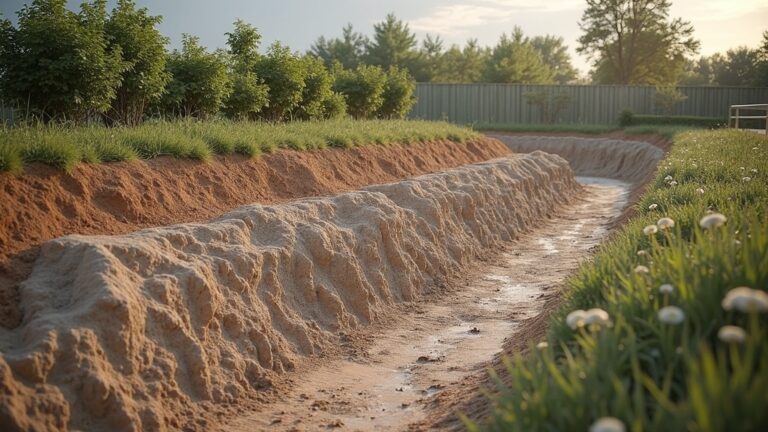

Backfill Gravel Retaining Wall: Essential Guide for Stability
Learn how a backfill gravel retaining wall uses clean, angular stone to manage water pressure and stabilize structures. This guide covers material selection, installation methods, drainage practices, and common mistakes for durable retaining walls.
Table of Contents
- What Is a Backfill Gravel Retaining Wall?
- Selecting the Right Gravel for Your Retaining Wall
- Installation Techniques for Gravel Backfill
- Drainage and Maintenance Considerations
- Frequently Asked Questions
- Comparison of Backfill Materials
- Practical Tips for a Successful Project
- Final Thoughts on Backfill Gravel Retaining Wall
- Further Reading
Backfill gravel retaining wall is a construction method where clean, angular gravel – typically 0.75 to 1.5 inches – is placed behind a retaining wall to provide drainage and reduce lateral pressure. This technique prevents hydrostatic buildup and improves long-term wall stability.
A properly constructed backfill gravel retaining wall is one of the most reliable ways to manage soil and water pressures behind a retaining structure. When water saturates the soil behind a wall, it creates hydrostatic pressure that can lead to cracking, leaning, or total failure. Using clean, angular gravel as backfill allows water to drain freely, reducing this pressure and improving the wall’s lifespan. This article explains the best practices for selecting gravel, installing backfill, and maintaining drainage to ensure your project stands the test of time.
What Is a Backfill Gravel Retaining Wall?
A backfill gravel retaining wall relies on a zone of clean, granular material placed directly behind the wall structure. This gravel zone acts as both a drainage layer and a structural component, reducing lateral earth pressures and preventing water buildup. The concept is supported by geotechnical experts who emphasize the importance of free-draining backfill. Daniel L. Hillel, Professor Emeritus at Hebrew University, notes that “behind any retaining wall, the backfill must allow water to drain freely; otherwise, pore-water pressure will eventually exceed the wall’s resistance and cause distress or failure” (Hillel, 2023)[4].
The gravel used must be clean – meaning it contains less than about 5 percent fines (silt or clay particles) – and angular in shape to interlock and provide stability. According to the U.S. Federal Highway Administration, “granular backfill with less than about 5 percent fines, placed with adequate compaction and drainage, is recommended behind highway retaining walls to control deformations and minimize long-term maintenance problems” (FHWA, 2024)[5]. This standard applies to residential, commercial, and infrastructure projects alike.
For homeowners and contractors, understanding the material specifications is the first step. The backfill gravel retaining wall approach is especially effective for segmental retaining walls (SRWs) and gravity walls, where the weight of the backfill itself contributes to stability. Robert B. Holtz, Professor Emeritus at the University of Washington, states that “for conventional gravity and segmental retaining walls, a free-draining granular backfill such as well-graded gravel is the single most effective way to reduce lateral earth pressures and improve wall performance” (Holtz, 2022)[6].
Selecting the Right Gravel for Your Retaining Wall
Choosing the correct gravel size and type is critical for a backfill gravel retaining wall. The most commonly recommended material is #57 crushed stone, which has particles ranging from about 0.75 to 1.5 inches. This size allows water to flow through easily while providing enough structural support to prevent soil migration. As noted by Gravelshop, “clean, graded gravel with particle sizes between 0.75 and 1.5 inches is widely recommended as the optimal structural backfill zone behind residential retaining walls” (Gravelshop, 2024)[1].
For smaller walls or narrow backfill zones, #67 stone (slightly smaller) may be used, while larger commercial walls may require 1.5-inch drainage gravel. The key is to avoid materials with high fines content, such as crusher run or screenings, which can clog drainage paths. The Allan Block Engineering Department advises that “using clean granular rock as backfill, typically a crushed stone or gravel with minimal fines, creates a structural mass that is both stable and highly permeable, dramatically reducing hydrostatic pressure behind the wall” (Allan Block, 2024)[7].
Another option is pea gravel, which is smaller (typically 0.25 to 0.5 inches) and rounder. While pea gravel drains well, it does not interlock as effectively as angular crushed stone, making it less suitable for structural backfill. HelloGravel’s technical guide recommends using “compacted crushed stone under wall blocks and pea gravel as drainage backfill behind the wall,” distinguishing between the base and backfill materials (HelloGravel, 2024)[8]. For most projects, a combination of crushed stone for the base and angular gravel for the backfill zone provides the best results.
Installation Techniques for Gravel Backfill
Proper installation of a backfill gravel retaining wall involves several key steps. First, prepare a level base of compacted crushed stone, typically 0.75 to 2 inches in size, to support the wall blocks. This foundation layer should be at least 6 to 12 inches deep, depending on wall height and soil conditions. The Home Depot’s installation guide advises that “retaining walls be backfilled to slightly below the wall height with gravel or sand, with gravel placed after each course to allow settlement and compaction” (Home Depot, 2024)[9].
As you build each course of blocks, backfill the 12-inch zone directly behind the wall with #57 clean stone gravel. This zone is critical for drainage. DeHardscape Supply recommends “filling the 12-inch zone directly behind the wall with #57 clean stone gravel, then transitioning to compacted native soil or topsoil beyond that zone” (DeHardscape Supply, 2024)[2]. For walls over 18 inches high, install a perforated drain pipe at the base of the backfill zone to collect and redirect water away from the wall.
Compaction is essential – each lift of gravel should be compacted with a hand tamper or plate compactor before adding the next course of blocks. The NCMA Technical Team emphasizes that “clean, well-draining granular material is the preferred backfill behind segmental retaining walls because it improves compaction, limits differential settlement, and provides positive drainage to relieve water pressures” (NCMA, 2024)[10]. Avoid dumping all the gravel at once; layer it in 6- to 8-inch lifts for proper compaction.
Drainage and Maintenance Considerations
The primary function of a backfill gravel retaining wall is to manage water. Without adequate drainage, even the strongest wall can fail. The gravel backfill zone must extend from the base of the wall to within 6 to 12 inches of the top surface, allowing water to exit freely. In addition to the gravel, a perforated drain pipe wrapped in filter fabric should be placed at the lowest point of the backfill to channel water to an outlet, such as a daylight drain or a dry well.
Maintenance is minimal but important. Inspect the wall annually for signs of bulging, cracking, or water pooling near the base. If you notice water stains or efflorescence (white mineral deposits), it may indicate that the gravel backfill is clogged with fines or that the drain pipe is blocked. In such cases, flushing the drain pipe or replacing the top layer of gravel can restore proper function.
For walls in areas with heavy clay soils or high water tables, consider adding a geotextile fabric between the gravel backfill and the native soil to prevent fines from migrating into the gravel. This is especially important if you are using a grout mixing guide for specialized backfill applications in mining or industrial settings, where soil conditions are more challenging. The gravel backfill zone works in tandem with the wall’s drainage system to keep the structure dry and stable for decades.
Important Questions About Backfill Gravel Retaining Wall
Can I use sand as backfill for a retaining wall?
Sand can be used as backfill, but it is not ideal. While sand drains better than clay, it does not provide the same structural interlock as angular gravel and can shift over time. For most retaining walls, clean angular gravel (0.75 to 1.5 inches) is preferred because it reduces lateral pressure and improves drainage. Sand may be acceptable for very short walls (under 18 inches) in well-draining soils, but gravel is the recommended choice for long-term performance.
How much gravel do I need for a backfill gravel retaining wall?
The amount of gravel depends on the wall’s length, height, and the specified backfill zone thickness. A standard rule is to calculate the volume of the 12-inch zone directly behind the wall, plus the base layer. For example, a 50-foot wall that is 4 feet high would require approximately 7.4 cubic yards of gravel for the backfill zone (50 ft x 4 ft x 1 ft = 200 cubic feet, or about 7.4 cubic yards). Always add 10 percent extra to account for compaction and settling.
Do I need a drain pipe behind a gravel retaining wall?
For walls over 18 inches high, a perforated drain pipe is strongly recommended. The pipe should be placed at the base of the gravel backfill zone, wrapped in filter fabric, and sloped to an outlet. Even with clean gravel, a drain pipe provides an extra layer of protection by actively channeling water away. For shorter walls in well-draining soil, the gravel alone may suffice, but adding a pipe is a low-cost insurance against future problems.
Can I backfill a retaining wall with soil instead of gravel?
While some walls can be backfilled with soil, it is not recommended for most situations. Soil, especially clay, retains water and increases hydrostatic pressure against the wall. This can lead to bowing, cracking, or collapse. A backfill gravel retaining wall uses clean gravel to drain water and reduce pressure. If you must use soil, ensure it is granular and well-draining, and include a drainage system. However, for durability and peace of mind, gravel backfill is the superior choice.
Comparison of Backfill Materials
Choosing the right backfill material is essential for wall stability. The table below compares the most common options for a backfill gravel retaining wall.
| Material | Drainage | Structural Support | Best Use |
|---|---|---|---|
| #57 Crushed Stone (0.75–1.5 in) | Excellent | High | Standard backfill zone for most walls |
| Pea Gravel (0.25–0.5 in) | Good | Moderate | Drainage layer behind structural backfill |
| Sand | Fair | Low | Short walls or as a leveling layer |
| Native Soil (clay/silt) | Poor | Variable | Not recommended for backfill |
Practical Tips for a Successful Project
Building a backfill gravel retaining wall requires attention to detail. Here are actionable tips to ensure your project succeeds:
- Always use clean, angular gravel. Avoid rounded river rock or materials with high fines content. Angular gravel interlocks better and maintains its structure under load.
- Compact in layers. Add gravel in 6- to 8-inch lifts and compact each layer thoroughly. Skipping compaction leads to settling and uneven wall movement over time.
- Include a drain pipe for walls over 18 inches. A perforated pipe at the base of the gravel zone is a small investment that prevents major drainage failures. For more advanced techniques, refer to a catskill mountain railroad engineering case study for inspiration on drainage in challenging terrain.
- Use filter fabric. Place geotextile fabric between the gravel backfill and native soil to prevent fines from clogging the drainage zone. This is especially important in clay-heavy soils.
- Plan for the top layer. Cap the gravel backfill with 6 to 12 inches of topsoil or decorative stone to prevent surface water from entering the drainage zone.
Final Thoughts on Backfill Gravel Retaining Wall
A backfill gravel retaining wall is a proven method for managing water pressure and ensuring long-term structural stability. By selecting the right gravel size, installing it in compacted layers, and incorporating proper drainage, you can build a wall that withstands the test of time. Remember that the key to success is clean, angular gravel and attention to compaction. For more detailed guidance on related techniques, explore our resources on cats drinking water to see how water management principles apply across different contexts. Start your project with confidence, and your retaining wall will remain strong for decades.
Further Reading
- Gravelshop – Retaining Wall Aggregates and Backfill Materials.
https://www.gravelshop.com/application-and-uses/retaining-walls-backfill-108.asp - DeHardscape Supply – Solid Ground: A Guide to Building Lasting Retaining Walls.
https://www.dehardscapesupply.com/s/stories/building-guide-retaining-walls - r/LandscapeArchitecture community discussion – Backfill for a retaining wall?
https://www.reddit.com/r/LandscapeArchitecture/comments/zr4kjl/backfill_for_a_retaining_wall/ - Hillel, D. L. Soil and Water: Physical Principles and Processes (updated preface).
https://academic.oup.com/book/44282/chapter/372503478 - U.S. Federal Highway Administration. Geotechnical Engineering Circular No. 11: Design and Performance of Earth Retaining Structures.
https://www.fhwa.dot.gov/engineering/geotech/pubs/gec11/ - Holtz, R. B. Principles of Geotechnical Engineering, 10th Edition – Design of Retaining Structures.
https://www.cengage.com/c/principles-of-geotechnical-engineering-10e-das-holtz/9781337705034PF/ - Allan Block Engineering Department. Best Practices for Segmental Retaining Walls – Wall Design and Construction.
https://allanblock.com/retaining-walls/BestPractices.aspx - HelloGravel – Pea Gravel for Retaining Wall Base: When to Use It and When to Avoid It.
https://hellogravel.com/guides/pea-gravel-for-retaining-wall-base-when-to-use-it-and-when-to-avoid-it/ - The Home Depot – How to Build a Retaining Wall.
https://www.homedepot.com/c/ah/how-to-build-retaining-wall/9ba683603be9fa5395fab90d68eac94 - NCMA Technical Team. TEK 3-11B: Design and Construction of Dry-Stack Segmental Retaining Walls.
https://ncma.org/resource/tek-3-11b-design-and-construction-of-dry-stack-segmental-retaining-walls/